
Honest Yoga Stretching Straps Review: What I Loved, What I Didn’t, and Who Should Buy
Whether you’re a dedicated yogi, a runner chasing a quicker recovery, or someone who just wants to touch their toes without wincing, a yoga stretching strap can be the most affordable upgrade to your flexibility routine. These simple tools extend your reach, create leverage in tight positions, and help you maintain alignment—without forcing your joints or rounding your spine. The result: safer, more effective stretching you can actually feel, even if your hamstrings have been stubborn for years.
In this Honest Yoga Stretching Straps Review: What I Loved What I Didn’t and Who Should Buy, I tested and compared the market’s most popular options—from multi-loop rehab classics to premium yoga belts with D‑rings. I looked at the details that matter in real life: portability (does it slip into a gym bag without tangling?), design and comfort (does it dig into your hands or feel soft yet stable?), performance and durability (does it hold without slipping, and will it fray after a month?), and standout features (guides, warranties, eco materials).
You’ll learn which straps excel for specific needs: the best yoga stretching strap for physical therapy, the best strap for deep yoga binds and alignment, and the best budget strap for travelers. I’ll also share what I personally loved (and where I wasn’t impressed), summarize real-world user feedback, and finish with a quick FAQ so you can buy with confidence. If you’ve ever wondered whether a $10–$30 textile can really upgrade your mobility, the short answer is yes—when you pick the right one for your body and goals.
Top Yoga Stretching Straps (What I Loved, What I Didn’t, and Who Should Buy)
1) OPTP Original Stretch Out Strap — Multi‑Loop PT Favorite with Instructional Guide
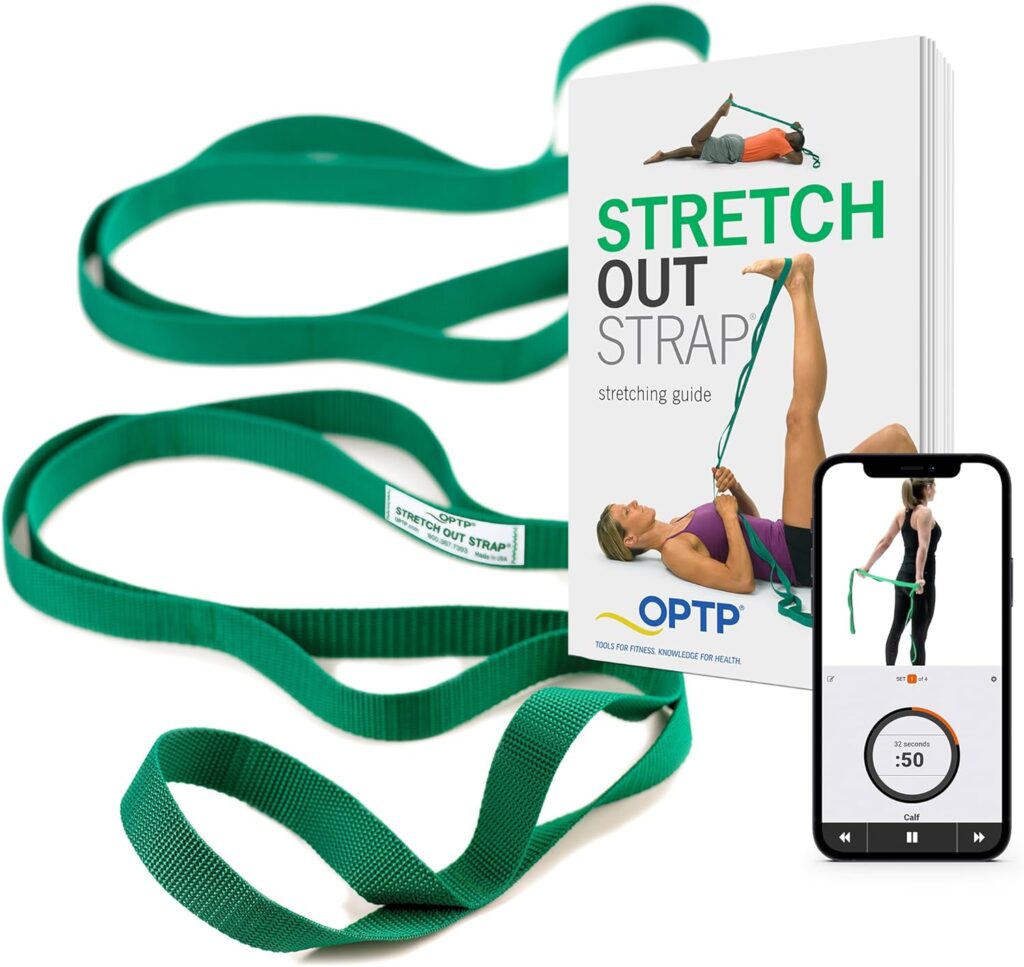
Specs: Length ~6 ft 4 in (≈76 in); Width ~1 in; Material: heavy-duty nylon; Weight: ~6 oz; Seasonality: all-season indoor/outdoor; Features: ~10 sewn‑in loops, includes printed stretching guide.
Who it’s best for: People doing physical therapy, beginners needing self‑progression, athletes rehabbing tight hamstrings/hip flexors, and anyone who wants structured guidance.
Pros:
✅ Multiple loops make progression intuitive and safe
✅ Includes a clear, useful stretching booklet
✅ Durable nylon with reinforced stitching
✅ No buckle or elastic—precise, stable holds
Cons:
❌ Webbing can feel a bit rough on bare hands
❌ Pricier than basic straps with no guide
In-depth Review: If you’re looking for the gold standard in multi-loop stretch straps, the OPTP Original Stretch Out Strap still earns its reputation. Portability & Design: The strap coils flat and drops easily into a gym bag; the no-buckle build means nothing to snag on clothing. The 1-inch webbing is slim but firm. I loved how the sewn-in loops act like built-in progress markers—no guesswork about hand placement, and it’s easy to get a stable hold at any mobility level. The tradeoff is a slightly coarse texture compared to premium cotton straps; during longer holds, you might prefer light gloves or yoga socks for comfort.
Performance & Durability: In use, the OPTP is rock-solid. There’s virtually no stretch, so leverage is predictable and safe. Over weeks of daily practice—hamstring openers, shoulder traction, calf stretches—the stitching showed no signs of creep or fray. The strap grips well around shoes or a bare foot, though cotton feels softer against the skin.
Standout Features: The included instructional guide is a real value add. If you’re new to mobility work, it shows anatomically sensible sequences that keep you from overdoing it. That alone makes it a smarter buy for beginners than many cheaper, “strap-only” competitors.
Real-world user experience: Feedback typically praises the OPTP’s longevity (“had it for years in PT/clinic settings”) and clarity of loops for gradual improvement. Common nitpicks mention the texture and the slightly higher price. What I loved: super intuitive progression and medical‑grade reliability. What I didn’t: not the softest feel during long holds. Overall, it’s the best yoga stretching strap for physical therapy and methodical progress.
👉 Check the latest price on Amazon here.
2) Tumaz Yoga Strap (D‑Ring) — Ultra-Strong Yoga Belt for Alignment and Binds
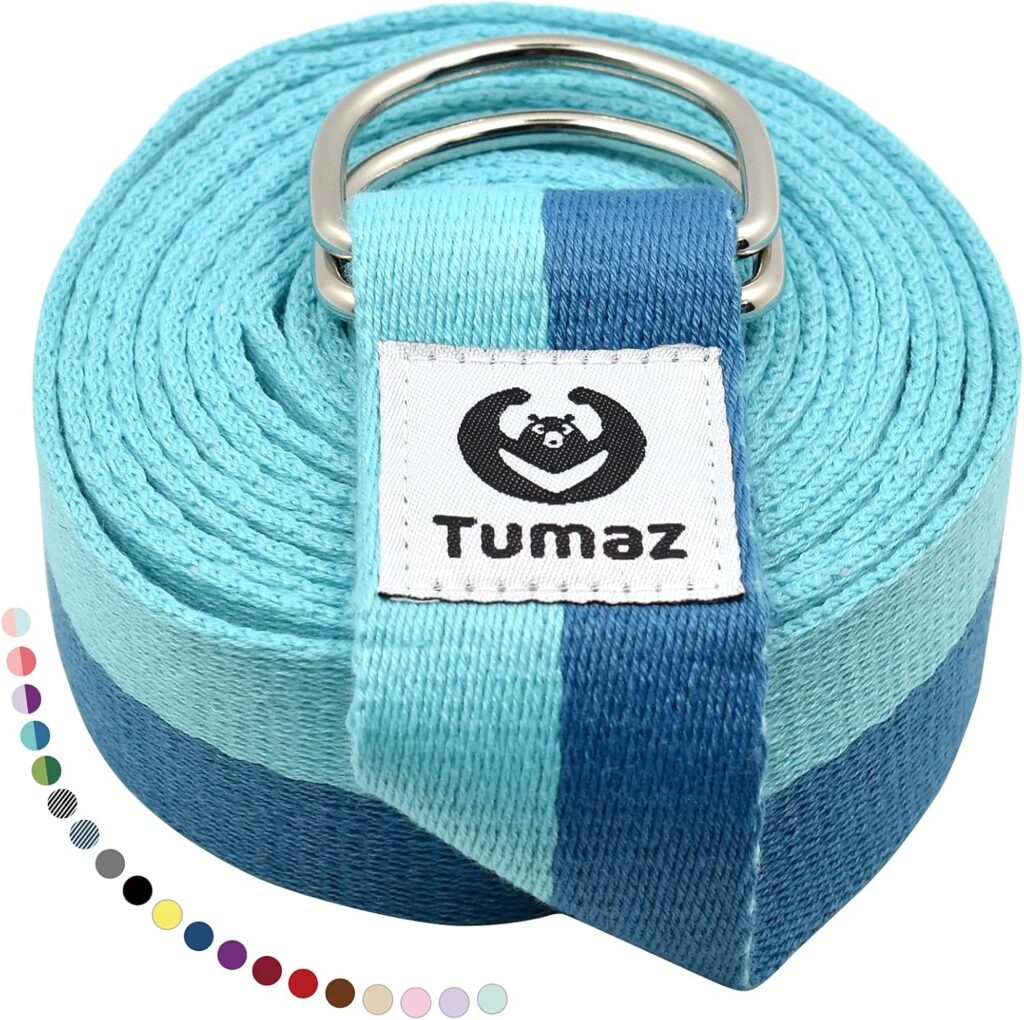
Specs: Lengths: 6 ft, 8 ft, or 10 ft; Width ~1.5 in; Material: soft cotton blend; Hardware: metal D‑rings; Weight: ~5–7 oz (varies by length); Seasonality: all-season; Features: high-tensile strength, many color options.
Who it’s best for: Yogis who want a classic belt-style strap for alignment, binds, and supported poses; studios and teachers; anyone who wants a strap that can double as a quick mat sling.
Pros:
✅ Extremely strong and secure D‑ring hold
✅ Soft, grippy cotton that’s comfortable on the hands
✅ Multiple lengths and colors to fit body and style
✅ Versatile: alignment, binds, shoulder/leg support, mat carry
Cons:
❌ No sewn-in loops—less intuitive for step-by-step progression
❌ Metal rings can clink or mildly pinch if placed poorly
In-depth Review: The Tumaz D‑Ring strap is a studio workhorse: simple, strong, and comfortable. Portability & Design: The cotton blend feels pleasantly soft while maintaining respectable grip in sweaty sessions. At 1.5 inches wide, it’s supportive without feeling bulky, and the strap rolls compactly in a bag. The metal D‑rings bite down cleanly; once you thread and pull, it doesn’t slip.
Performance & Durability: Where Tumaz shines is weight-bearing integrity—think supported dancer pose, gomukhasana binds, and safe shoulder traction in restorative setups. It retains shape with no noticeable elongation and minimal fray after frequent use. For long Yin holds, the cotton fabric wins for hand and foot comfort over narrower nylon webbing.
Standout Features: The D‑ring system gives micro-adjustability that loop straps can’t match. This fine-tuning is ideal for alignment-focused practitioners who want half-inch precision for shoulder distance or hip square. It also doubles as an impromptu mat sling—handy if you’re commuting to class.
Real-world user experience: Many users call out the “grippy-soft” feel and the sense of security in weight-bearing binds. Typical complaints revolve around the lack of loops for beginners who want easy progression landmarks. What I loved: the secure hold and comfort for long holds. What I didn’t: occasional clink or pinch points from the metal rings if the buckle lands under the body. If you want the best yoga stretching strap for alignment and binds, this is it.
👉 Check the latest price on Amazon here.
3) Manduka Align Yoga Strap — Premium Cotton, Secure Buckle, Studio-Grade
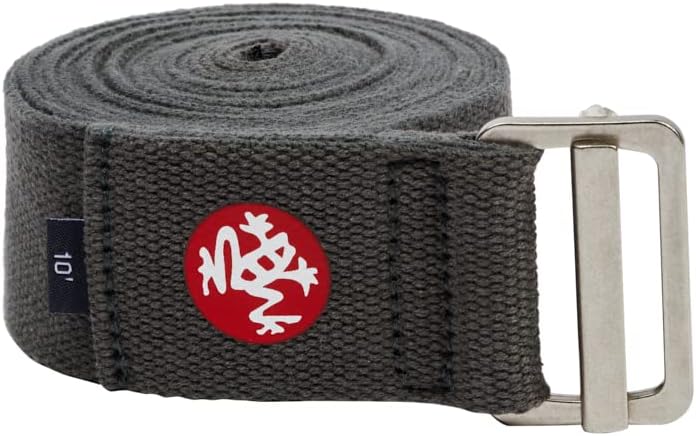
Specs: Lengths: 8 ft or 10 ft; Width ~1.75 in; Material: thick, unbleached cotton; Hardware: high-quality alloy buckle; Weight: ~6–7 oz; Seasonality: all-season; Features: eco-minded materials, reinforced stitching.
Who it’s best for: Practitioners who prioritize premium build, eco-leaning materials, and absolute buckle security; studio owners who want durable gear that holds up to daily classes.
Pros:
✅ Premium cotton feels substantial, supportive, and grippy
✅ Wide strap disperses pressure for comfort in long holds
✅ Rock-solid buckle with smooth adjustment
✅ Durable, studio-grade stitching and materials
Cons:
❌ Pricier than most competitors
❌ Slightly stiff out of the box—break-in helps
In-depth Review: Manduka’s Align strap is the “buy once, use forever” option in this roundup. Portability & Design: It’s a touch wider and thicker than budget belts, which makes it feel reassuringly solid but still easy to stash. The cotton has a premium handfeel with natural grip that reduces slip over leggings or a sweaty foot. The alloy buckle is a standout—it tightens smoothly and stays put without needing to double-back obsessively.
Performance & Durability: In active flows and restorative holds, the extra width spreads load beautifully across the arch or thigh. For shoulder openers and deep hamstring work, that comfort margin mattered in 2–3 minute holds. After weeks of heavy use, there was no visible fraying, and the buckle showed zero deformation.
Standout Features: The eco-conscious cotton and refined buckle system elevate the overall experience. If you’re teaching, lending gear, or you just want a strap that feels like a long-term investment, the Align justifies the price.
Real-world user experience: Owners often highlight the comfort of the wider cotton and the set-it-and-forget-it buckle. A small number mention it feels stiff out of the box (mine softened within a week). What I loved: that plush, grippy cotton in long holds and the absolute buckle confidence. What I didn’t: the premium price—though the longevity helps it pencil out. For many, it’s the best premium yoga stretching strap you can buy.
👉 Check the latest price on Amazon here.
4) Clever Yoga Stretch Strap with Loops — Beginner-Friendly Progression and Lifetime Support
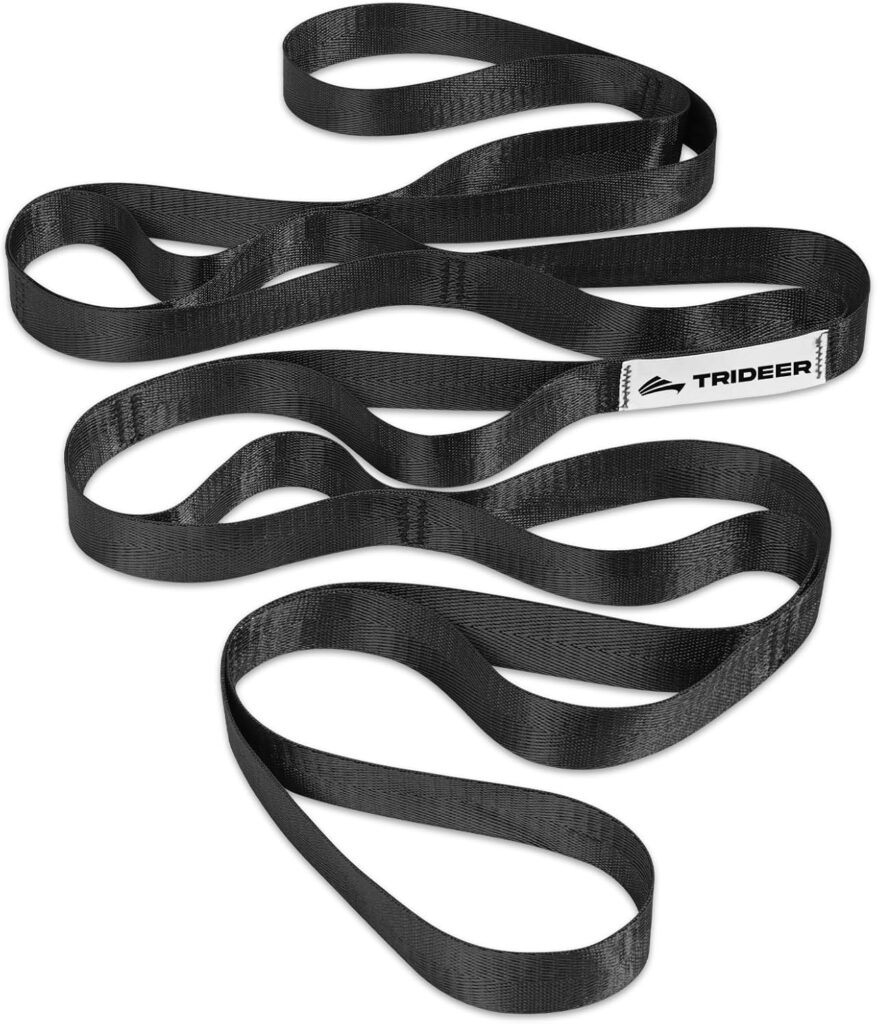
Specs: Length ~8 ft; Width ~1 in; Material: durable nylon; Weight: ~6–7 oz; Seasonality: all-season; Features: multiple sewn-in loops (commonly 8–10), often includes digital resources and lifetime warranty.
Who it’s best for: Beginners who want guided progression and home users who value strong customer support and a warranty. Great for stretching routines focused on hamstrings, hips, and shoulders.
Pros:
✅ Easy loop-by-loop progression—great for new users
✅ Support resources/warranty add value and confidence
✅ Gentle on hands and feet compared to narrow, rough webbing
✅ Versatile for PT-style and yoga-style stretches
Cons:
❌ Slight give under heavy load compared to stiffer straps
❌ Loop spacing may feel short for very tall users
In-depth Review: Clever Yoga’s looped strap merges the best of both worlds: PT-friendly loops and yoga versatility. Portability & Design: It coils neatly and resists tangling. The looped architecture means you can grab “rungs” like a ladder, making it hard to overreach or round your back—huge for hamstring work and seated folds. The webbing is on the friendlier side for bare-hand use, though not as plush as premium cotton belts.
Performance & Durability: For daily stretching, it performs reliably with firm, mostly non‑stretch nylon. Under strong traction (e.g., intense shoulder or quad pulls), I noticed a whisper of give versus OPTP—nothing major, but worth noting if you want absolute rigidity. Stitching held tight through repeated loading on the higher loops.
Standout Features: The big win here is the user support—Clever Yoga is known for responsive service and generous warranties. If you’re unsure about your first strap, that peace of mind matters.
Real-world user experience: Many reviewers highlight breakthrough moments with hamstring flexibility thanks to the intuitive loop progression and consistent holds. Some taller users wish for longer overall length or wider loop spacing. What I loved: beginner-proof design that genuinely encourages safe, repeatable progress. What I didn’t: a tiny bit of give under max load. Overall, it’s the best yoga stretching strap for beginners at home.
👉 Check the latest price on Amazon here.
Frequently Asked Questions
What is a yoga stretching strap and how do I use it?
A yoga stretching strap is a non-elastic belt or looped band that extends your reach in poses. Wrap it around your foot, thigh, or shoulder to create leverage and maintain neutral alignment while you gently increase range of motion. Hold positions for 30–90 seconds, breathing evenly.
Which is better: a loop strap or a D‑ring belt?
Loop straps are great for beginners and PT because each loop acts like a rung—easy progression, no buckle. D‑ring belts offer micro-adjustability and excel in yoga alignment and binds. Choose loops for step-by-step progress, D‑rings for fine-tuned fit.
What length yoga strap should I buy?
Most people do well with 8 feet. If you’re tall (over 6’0″) or want generous wraps for binds and restorative setups, consider 10 feet. For simple stretches or portability, 6 feet can work.
Do stretching straps really improve flexibility?
Yes—used consistently, straps help you hold safe end ranges longer and with better alignment, which supports mobility gains over time. Aim for 3–5 sessions per week and steady, comfortable tension rather than forcing depth.
Are yoga straps machine washable?
Most cotton and nylon straps are hand-wash or gentle-cycle friendly. Use mild detergent, air dry, and avoid high heat to protect stitching and hardware. Always check the brand’s care instructions.
Can beginners use a stretching strap safely?
Absolutely. Start with loop straps or basic hamstring and calf stretches. Keep your spine long, avoid bouncing, and stop if you feel sharp pain. Consistency beats intensity.
Final Verdict: Choose Based on Your Priorities
If you’ve made it this far in our Honest Yoga Stretching Straps Review: What I Loved What I Didn’t and Who Should Buy, you’ve seen that the “best” strap depends on how you practice and what you value most—budget, portability, comfort, or precision.
For structured, PT-style progress and rehab reliability, the OPTP Original Stretch Out Strap is the top pick. Its multiple loops and included guide make it the most confidence-inspiring for targeted hamstrings, calves, and shoulders. If you want alignment precision and long-hold comfort in a traditional yoga setting, the Tumaz D‑Ring and Manduka Align rise to the top: Tumaz delivers exceptional strength and soft handfeel at a great value, while Manduka’s wider, premium cotton and secure buckle feel worthy of studio use for years.
Beginners practicing at home will love the Clever Yoga Stretch Strap with Loops for its easy, rung-by-rung progression and supportive warranty—it’s the best yoga stretching strap for beginners who want guidance without overthinking setup. Travelers and budget hunters should grab the ProsourceFit Multi-Grip: it’s lightweight, compact, and effective enough to make cooldowns and hotel-room mobility sessions a no-excuses habit.
In short: prioritize loops + guide (OPTP, Clever Yoga) if you’re new or doing rehab; go D‑ring cotton (Tumaz, Manduka) for alignment work and luxurious comfort; choose lightweight multi-loop (ProsourceFit) for packability and price. All five will improve flexibility when used consistently; the best one is the strap you’ll actually use—day after day, stretch after stretch. Pick the design that fits your body, your style, and your routine, and your mobility will follow.
